


Introduction
The automotive industry operates in one of the most demanding manufacturing environments in the world. Tight tolerances, complex geometries, high production volumes, and strict quality standards define modern automotive component manufacturing. To meet these requirements, manufacturers increasingly rely on CNC technology to improve efficiency, precision, and scalability.
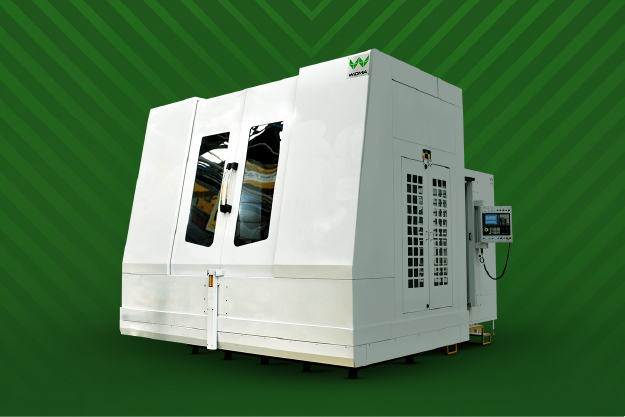
CNC (Computer Numerical Control) machines automate machining processes using programmed instructions, enabling consistent, repeatable production of complex parts. In automotive parts manufacturing and auto component manufacturing, CNC systems have become the backbone of operations, ensuring faster production cycles and superior quality standards.
What Are CNC Machines and Why Are They Critical for Automotive Component Manufacturing
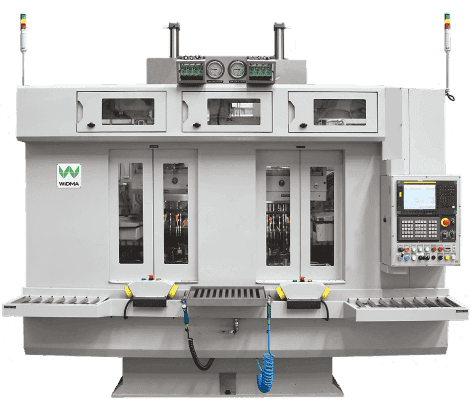
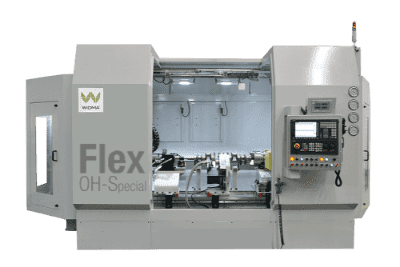
CNC machines are automated machine tools controlled by computer programs that dictate movement, speed, and tool paths. Unlike conventional machining, CNC systems eliminate manual intervention and deliver consistent results across production batches.
In automotive component manufacturing, CNC machines are critical because they:
- Maintain tight dimensional tolerances
- Enable high-speed, high-volume production
- Reduce human error
- Improve repeatability across large production runs
Understanding CNC Machining and Its Working Principles
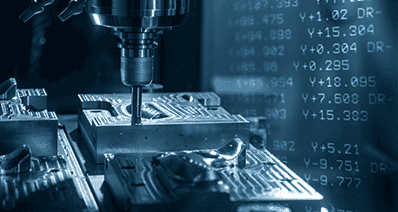
CNC machining works by converting CAD designs into machine-readable code (G-code). The CNC controller then drives motors and actuators to cut, drill, mill, or turn raw materials into finished automotive components.
The process involves:
- Designing the component using CAD software
- Converting the design into CAM-generated tool paths
- Executing machining operations through CNC-controlled movement
This digital-to-physical workflow ensures precision and uniformity in automotive component manufacturing.
Types of CNC Machines Used in Automotive Component Manufacturing
Several types of CNC machines are commonly used in automotive component manufacturing, including:
- CNC turning centers for shafts, axles, and cylindrical components
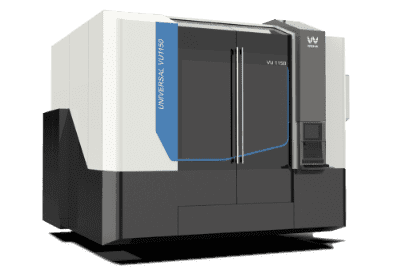
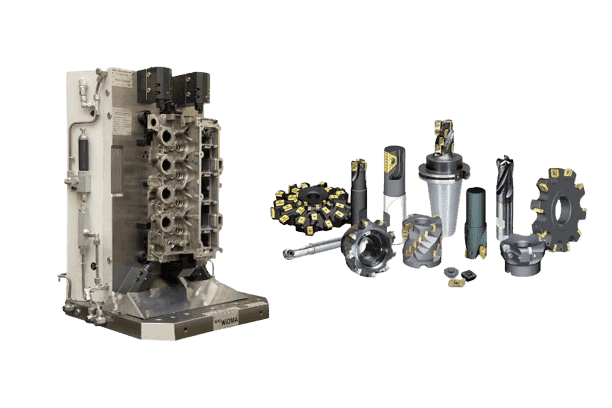
- CNC milling machines for engine blocks and transmission housings
- Multi-axis CNC machines for complex geometries
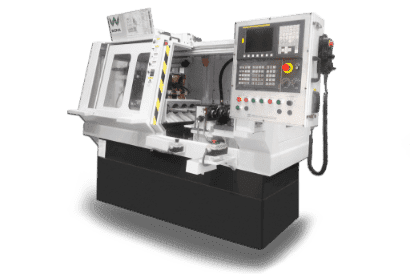
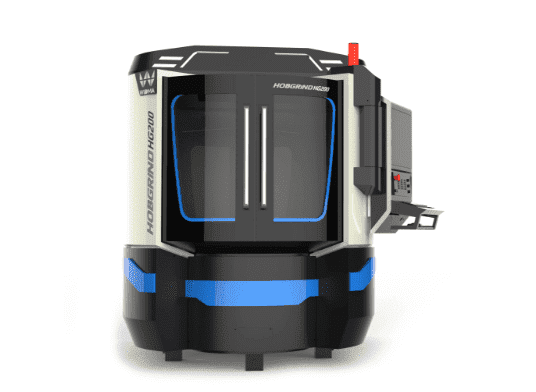
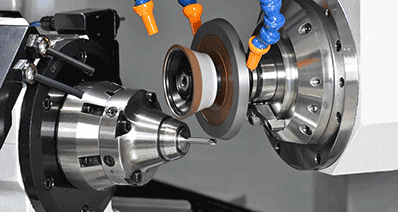
- CNC grinding machines for high-precision finishing
- CNC drilling machines for deep-hole applications
Each type serves a specific function within auto component manufacturing, depending on component design and production volume.
Key Materials Machined for Automotive Components Using CNC Technology
CNC machines process a wide range of materials in automotive parts manufacturing, including:
- Alloy steels for crankshafts and camshafts
- Aluminium alloys for lightweight engine components
- Cast iron for engine blocks
- Stainless steel for exhaust systems
- High-performance alloys for transmission components
The ability to machine diverse materials with precision makes CNC systems indispensable in modern automotive component manufacturing.
How CNC Machines Improve Precision and Quality in Automotive Component Manufacturing
Precision and quality are non-negotiable in automotive component manufacturing. CNC technology is enhanced by combining automation with advanced control systems.
Faster Cycle Times Compared to Conventional Machining Methods
CNC machines significantly reduce machining time by optimizing tool paths and enabling high-speed cutting. Faster cycle times translate directly into higher output and improved efficiency in automotive component manufacturing.
Multi-Axis CNC Machining for Complex Automotive Components
Multi-axis CNC machines allow simultaneous movement across multiple axes, enabling the production of intricate automotive components in a single setup. This reduces repositioning errors and enhances dimensional accuracy.
Continuous Production and Reduced Downtime in Automotive Component Manufacturing
CNC systems support automated tool changes, real-time monitoring, and minimal manual intervention. This ensures continuous production with reduced downtime, improving overall performance in automotive component manufacturing.
Scaling Production from Low-Volume to High-Volume Automotive Components
CNC machines are highly scalable. Manufacturers can easily transition from prototype batches to high-volume runs without compromising quality. This flexibility is vital in auto component manufacturing, where demand fluctuates.
Long-Term ROI of CNC Automation for Automotive Manufacturers
While CNC machines require capital investment, their ability to reduce scrap, minimize rework, and improve production efficiency delivers long-term ROI in automotive component manufacturing.
How to Choose the Right CNC Machine for Automotive Parts Manufacturing
Selecting the right CNC machine is a strategic decision in automotive parts manufacturing. The choice directly impacts efficiency, productivity, and cost control.
Key Factors to Consider: Accuracy, Speed, and Automation Level
Manufacturers should evaluate:
- Required tolerance levels
- Spindle speed and torque capacity
- Automation features such as pallet changers and robotic loading
- Multi-axis capability
These factors determine how effectively a machine can support automotive component manufacturing goals.
Importance of After-Sales Support and Service Reliability
Reliable service support ensures minimal downtime and sustained productivity. In automotive component manufacturing, machine availability is crucial for maintaining delivery timelines.
Aligning CNC Investment with Automotive Production Goals
CNC investments should align with long-term production plans, including:
- Expected production volumes
- Future scalability needs
- Component complexity
- Cost optimization strategies
A well-aligned CNC solution strengthens operational efficiency in both automotive parts manufacturing and auto component manufacturing environments.
Conclusion
CNC technology has fundamentally transformed automotive component manufacturing by enabling higher precision, faster cycle times, and scalable production capabilities. From engine blocks to transmission shafts, CNC machines ensure that every component meets stringent quality standards.
As the automotive industry continues to evolve toward electrification, lightweight materials, and complex component designs, CNC systems will remain central to innovation. By investing in the right CNC solutions, manufacturers can enhance productivity, reduce costs, and maintain competitiveness in modern automotive parts manufacturing.
FAQ
1. How do CNC machines improve efficiency in automotive component manufacturing?
CNC machines automate machining processes, reduce cycle times, minimize errors, and enable consistent high-volume production.
2. What types of automotive component manufacturing processes use CNC machines?
Processes such as turning, milling, drilling, grinding, and multi-axis machining rely heavily on CNC systems.
3. Can CNC machines reduce production costs in automotive component manufacturing?
Yes, CNC automation reduces scrap, rework, labor dependency, and downtime, lowering overall production costs.
4. Which automotive components are commonly produced using CNC machines?
Crankshafts, camshafts, engine blocks, transmission housings, axles, and brake components are commonly CNC machined.
5. What is the future of CNC technology in automotive component manufacturing?
The future includes greater automation, AI-driven optimization, smart manufacturing integration, and enhanced multi-axis machining capabilities.