
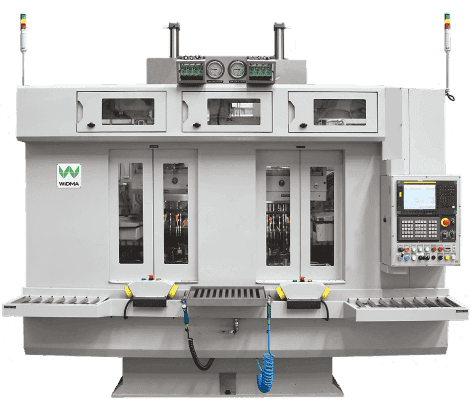
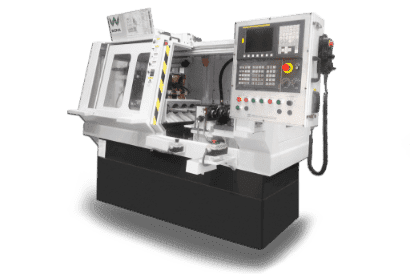
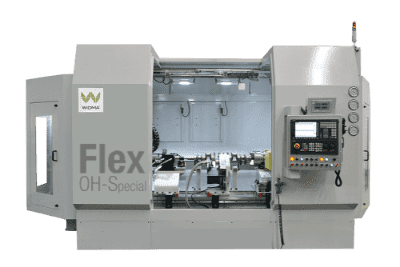
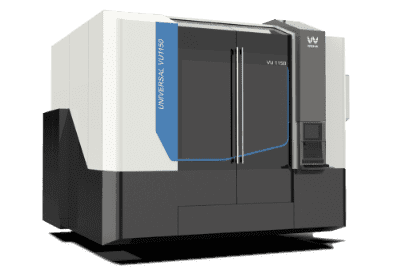
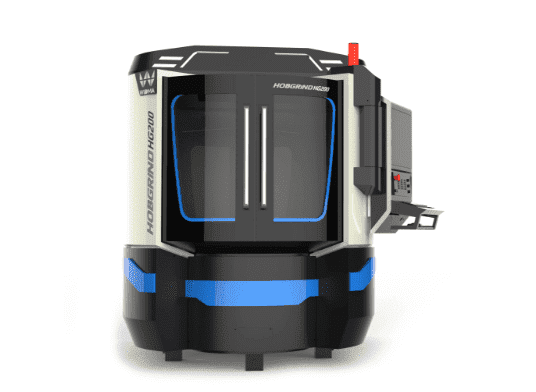




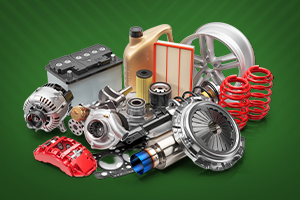
The automotive industry operates on a foundation of precision, reliability, and mass production efficiency. Whether it is an engine block, transmission housing, crankshaft, brake component, or steering system, each part must meet strict tolerances and global quality standards. In recent years, CNC technology has become indispensable for automotive component manufacturers, enabling them to achieve the speed, accuracy, and repeatability required for modern vehicle production.
From machining complex geometries to reducing cycle times and integrating automation, CNC machines are transforming the way manufacturers approach manufacturing automotive components. This blog explores how CNC advancements are shaping today’s automotive industry and driving next-level productivity.
The Need for CNC Technology in Automotive Component Manufacturing
Automotive production requires extremely tight tolerances, consistent surface finishes, and the ability to produce millions of identical parts without deviation. Traditional machining cannot achieve this level of precision at scale.
Automotive component manufacturers rely on CNC systems because they offer:
- Repeatability across thousands of cycles
- Micron-level accuracy
- Faster machining speeds
- Reduced scrap and rework
- Compatibility with multi-material components (steel, aluminium, cast iron, composites)
- Seamless integration with automation
Vehicle architectures have evolved with electric vehicle (EV) adoption. This increases complexity in part design. However, CNC machines help manufacturers maintain process stability.
How CNC Machines Improve Precision for Automotive Components
1. Computer-Controlled Accuracy for Critical Tolerances
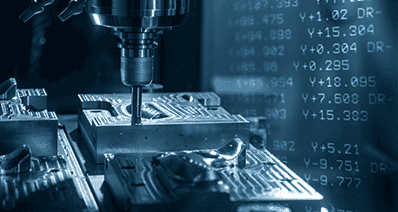
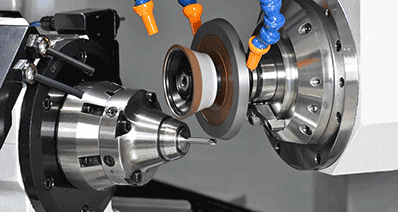
Automotive engines, drivetrains, and braking systems require extremely precise geometries. CNC systems execute programmed toolpaths with unmatched accuracy, ensuring features such as bores, slots, threads, and profiles meet demanding specifications.
2. Multi-Axis Capabilities for Complex Geometries
With 4-axis, 5-axis, and multi-spindle setups, CNC machines can complete multiple operations in a single setup. This reduces human error, improves dimensional consistency, and is particularly valuable when manufacturing automotive components like turbo housings, steering knuckles, and aluminium transmission cases.
3. Predictable Surface Finishes
CNC technology provides granular control over feed rates, speeds, and tool selection. This results in consistent surface finishes that help improve sealing performance, reduce vibration, and extend the lifespan of mechanical assemblies.
Enhancing Efficiency in Automotive Production with CNC
1. Reduced Cycle Times Through Automation
Cycle time optimisation is essential for automotive component manufacturers. CNC machines equipped with automatic tool changers, pallet systems, and robotic loading enable continuous machining with minimal human intervention.
This leads to:
- Higher throughput
- Lower labour dependency
- Faster response to production demands
2. Optimised Material Utilisation
CNC programming ensures minimal wastage by calculating ideal tool paths and cutting strategies. Efficient swarf and chip control further supports sustainability efforts and cost reduction.
3. Lower Scrap Rates and Improved First-Time Quality
By minimising dimensional variance, CNC systems significantly reduce rejected parts and rework time- two major challenges in mass automotive production.
4. Seamless Scalability
Whether producing prototypes or full-scale production batches, CNC machines adapt easily through program adjustments, making them ideal for rapid scaling.
Real-World CNC Applications in Automotive Component Manufacturing
Engine and Powertrain Components
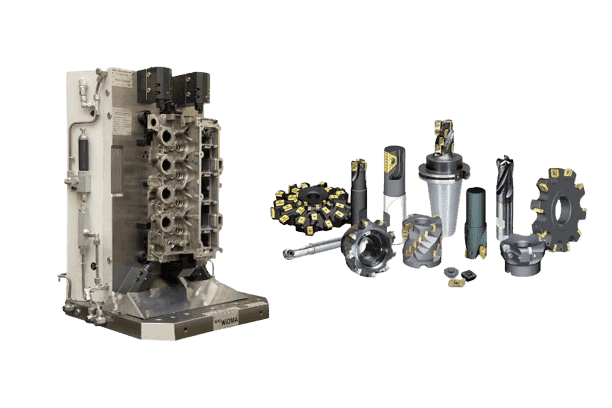
CNC machines are used to manufacture engine blocks, camshafts, crankshafts, cylinder heads, and connecting rods. For EVs, CNC machining is essential for motor housings, battery trays, and inverter components.
Transmission and Gearbox Assemblies
Multi-axis CNC machines handle milling, drilling, honing, and finishing of complex housings and precision gears. These processes require high rigidity and tool control to maintain part longevity.
Steering and Suspension Systems
Critical safety components such as control arms, steering knuckles, hubs, and brackets depend on CNC precision for consistent geometry and structural stability.
Brake Components
Disc brakes, callipers, and back plates require precision machining to ensure balance, durability, and safety.
Body and Interior Components
CNC machining supports mould manufacturing for dashboards, bumpers, trims, and other injection-moulded parts.
By integrating CNC technology across these areas, automotive component manufacturers achieve reliability, cost efficiency, and compliance with global quality standards.
How CNC Programming Improves Automotive Manufacturing Quality
1. CAM-Based Tool Path Optimisation
Toolpaths designed in CAM software reduce machining time and tool wear while improving finish quality. This is especially crucial for high-volume automotive production.
2. Simulation for Error Prevention
Simulated machining detects potential collisions and toolpath issues before production begins. This reduces downtime and improves safety.
3. Standardisation Across Production Lines
Shared CNC programs across multiple machines ensure consistent production quality across global manufacturing plants — a major advantage for multinational automotive manufacturers.
CNC Technology and Industry 4.0 for Automotive Manufacturing
Emerging technologies are accelerating how automotive component manufacturers use CNC machines:
1. IoT-Enabled Monitoring
Real-time tracking of spindle loads, tool wear, temperatures, and vibration ensures predictive maintenance and less downtime.
2. Automated Quality Control
In-machine probing, laser inspection, and dimensional scanning ensure components meet tolerances during machining — not after.
3. Robotic Integration
Robotic arms manage loading, unloading, part handling, and tool changes, reducing human error and increasing safety.
4. Data-Driven Decision-Making
CNC systems integrated with MES/ERP platforms provide complete production visibility and traceability.
Together, these advancements make CNC technology a critical enabler of smart automotive manufacturing.
Conclusion
As demands for accuracy, speed, and global competitiveness increase, automotive component manufacturers depend on CNC technology to deliver high-quality components consistently and efficiently. The ability to machine complex parts, reduce cycle times, integrate automation, and maintain tight tolerances makes CNC systems the backbone of modern vehicle production.
Whether producing internal combustion, hybrid, or electric vehicle components, CNC machines provide the precision and flexibility required to support the future of mobility.